Get the best Fire prevention best online

Best Fire prevention tips from top experts on your computer screen available only at Advance Safety Solutions

Expert Interview Question Answers

Want to know what your employer will ask you? You are on the right website.

Online Safety course training

Getting enrolled in IOSH or NEBOSH is tough but we help you get through it.

Online Safety Solutions

Safety brings first aid to uninjured. Learn everything about safety online.

Thursday, 25 February 2016

Action to be taken in the event of Fire

Action to be taken in the event of Fire


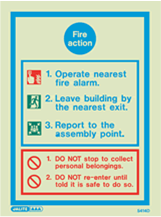
Following action need to be taken by individual on discovery of fire.


Reporting


On discovery of fire raise the alarm and shout loudly Fire, 

Fire. Fire

• Must alert everyone on board, no matter what 

time and how small the fire may be.

• Communicate through all available resources like 

telephone, mobile, shouting and two way radio etc

• Call for the help.

Note: Remain calm doesn’t be panic 

Tackle


• Try to tackle the fire and extinguish.

• DO NOT put yourself or others at risk

• Only tackle if you have the correct extinguisher 

• Only if you feel confident to do so

Note: Remember the rule of “PASS” while operating the fire 

extinguisher

• 

Be careful of wind direction. Always operate 

towards wind direction.

Evacuate


• If first aid fire fighting is unsafe or not enough.

• The heat and smoke become too much

• The extinguisher has run out.

• You must leave by the nearest safe route

• If possible close the doors, windows ,A/C so as 

to restrict the fire spreading


REMEMBER:  personal safety is paramount


Wednesday, 24 February 2016

Fire Prevention Safety Tips

Fire Prevention Safety Tips


  • Take extra care when using portable heaters. Keep combustible items at least 3 feet (.91m) away.


  • Check your smoke detectors routinely and change batteries, at a minimum annually.                               Replace if > 10 years old.
  • Never Smoke in Bed!


  • Keep flammables away from ignition sources


  • Utilize flammable storage cabinets


  • Know your chemical properties (check the MSDS for flammable/combustible information)


  • Do not block fire extinguishers with equipment


  • Utilize those with electrical      expertise/installations/assistance


  • Do not overload outlets - use a track plug


  • Practice good housekeeping techniques in the office/work area


  • Inspect wires for possible damage and replace as needed
  • Always maintain good house keeping


Summary


  • There must be enough exits in the proper arrangement for quick escape


  • Exit routes must be marked, lighted, free of obstructions, and locks must not be used to impede or prevent escape


  • An emergency action plan and a fire prevention plan must be in place


  • Fire extinguisher classes and numerical ratings help a user understand its capabilities


  • Fire extinguishers must be inspected, maintained and employees must be trained in how to use them


  • A designated assembly area must be known by all to head count in case of emergency


  • Continues review and improvement of ERPs.


  • Conduct fire drills regularly in specific intervals.


  1. What extinguisher can be used to tackle an electrical fire?
a) water  b) foam   c) CO2


  1. What type of fire is foam most suitable for?
a) gas   b) liquid   c) electrical


  1. On hearing the alarm, what must you do?
a) report to the muster point   b) report to OIM office   c) go to your cabin


  1. class D fire is:
a) metals   b) liquids   c) solids


  1. What is it that actually ignites?
a) the oxygen b) the material   c) the vapors coming from the heated fuel


  1. When working in smoke, what must you do:
a) walk standing up   b) keep low, working by touch to escape   c) hide from the smoke


  1. Foam can be used on Class B AND Class A fires?
TRUE or FALSE


  1. Powder extinguishes the fire by interrupting the chemical reaction of combustion?
TRUE or FALSE


  1. Powder is BEST for Class A fires?
TRUE or FALSE


10) Fire needs 3 vital factors, what are they?

Tuesday, 23 February 2016

Emergency Action Plan in Fire Safety


If Someone Catches Alight:


    • STOP – where you are


    • DROP – to the floor


    • ROLL – around on the floor.


This will smother the flames, possibly saving your life…

Fire Blankets


  • If you choose to have a fire blanket, make sure that it conforms to British Standard 6575.
  • As they are made of fire resistant material they are ideal in the kitchen to smother pan fires.


  • They are also useful for wrapping around a person whose clothes are on fire.
Emergency Action Plan


  • Describes actions that must be taken to ensure employee safety in emergencies


Emergency Action Plan enables employees

What actions to take in emergency situations.


  • Covers reasonably expected emergencies, such as fires, explosions, toxic chemical releases, hurricanes, tornadoes and floods.


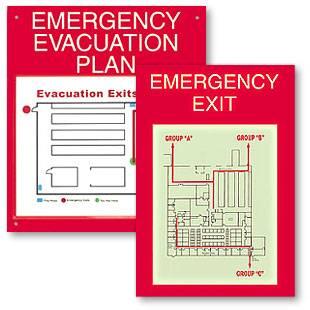
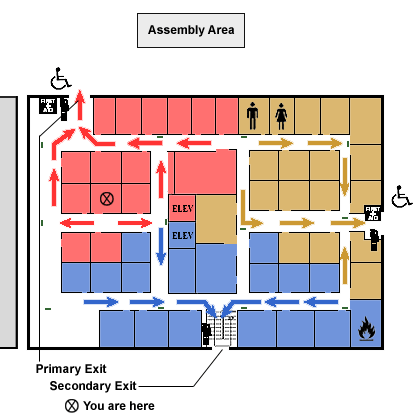
  • Includes floor plans or maps which show
Emergency Escape Routes

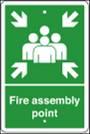
    • Emergency Action Plan states you                                   must have a Fire Assembly Point posted


    • All signs must contain a pictogram;                                          text only signs are no longer acceptable


    • Designate & Post Names of the Muster Wardens,


    • You should have a secondary assembly point, if for                   any reason the primary point could not be used.


    • Monthly Fire Drills should be scheduled to test the Emergency Action Plan


    • Post Emergency phone numbers
  With address and the address and directions to your
  Facility
  • A dedicated place for Assembly area           
must be notified to all

Sunday, 21 February 2016

Fire Safety Solutions

Fire Safety tips


Fires kills more than 200 and injures thousands workers each year. About 4% of the world gross domestic products lost every year though the cost of deaths, injury absence etc due to occupational accidents / incidents.


Fire incident of piper Alfa and Bradford City stadium were amongst the worst fire disaster in the history {Videos}.There is a long and tragic history of workplace fires caused by problems with fire exits and extinguishing systems

This is the responsibility of employer to provide proper firefighting equipment, and employee training to prevent fire deaths and injuries in the workplace. The employee responsibility is to stick with rule and Fire & safety code of practices.


Why Fire and Safety at sight

  • Moral
  • Legal
  • Economic

Key Benefits for you and your organization of introducing Fire and Safety management system are:-

  • Complying with legislative and other requirements
    • Helping you to deliver the policy


    • It is a moral binding

    • Enabling improved management of Fire and safety risk


    • Providing synergy with good business management.


    Aim of the Course
    • To trained the students [Employees, contractors and visitors] about theory of element of combustion, local fire and safety procedures common causes of fire, safe and appropriate use of fire extinguisher to overcome fire incidents at work sites
    • To give them an understanding of how to react in the event of fire.


Friday, 5 February 2016

LOCKOUT/TAGOUT


Definition of Lockout/Tagout

Lockout is a technique used to prevent equipment from being accidentally started and
stored energy from being released while an associated machine or piece of equipment is
being serviced.